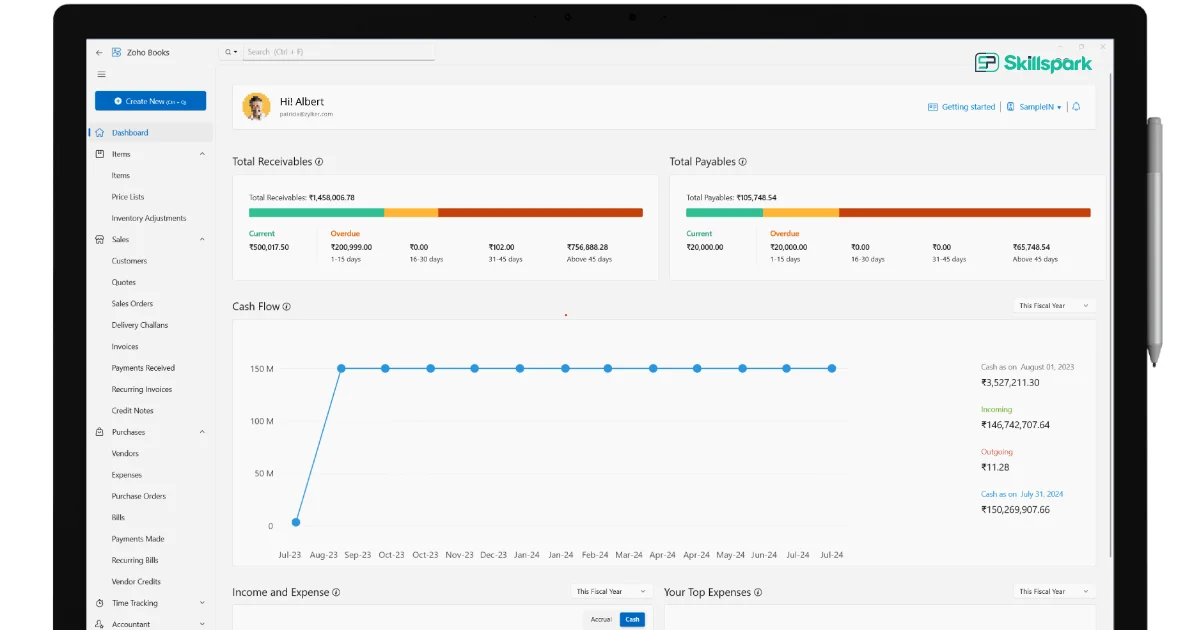
Over the last five years, data analytics has evolved from a support function into a central pillar of decision-making across Indian industries. What was once limited to basic reporting and performance tracking has expanded into predictive analysis, automation, and artificial intelligence–driven insights.
This transformation has not only reshaped how organizations operate but has also changed the skills they expect from professionals. Today, employers increasingly value individuals who can work with data, interpret insights, and support business decisions using analytical tools.
As India continues its digital expansion, learning data analytics
Evolution of Data Analytics in India (2020–2025)
Between 2020 and 2025, India witnessed a significant increase in data generation due to rapid digitization, cloud adoption, and the growth of online platforms. The expansion of digital payments, e-commerce, telemedicine, and enterprise software systems led to a massive rise in structured and unstructured data.

- India’s data analytics market was valued at approximately USD 3.5 billion in 2024 and is projected to exceed USD 21 billion by 2030, growing at over 35% CAGR.
- Over 70% of large Indian enterprises have adopted business intelligence or analytics platforms.
- India now generates over 2.5 quintillion bytes of data daily, driven by internet usage, mobile applications, and digital services.
This growth has shifted analytics from a technical function to a strategic business capability.
How Data Analytics Has Changed Corporate Decision-Making
Modern organizations no longer rely solely on experience or intuition to make decisions. Data analytics now plays a central role in planning, monitoring, and execution.
Key Changes in Corporate Work Culture
- From Periodic Reporting to Real-Time Insights
Organizations increasingly use live dashboards instead of monthly or quarterly reports to track performance and respond quickly. - From Descriptive to Predictive Analysis
Companies now use historical data to forecast trends, identify risks, and plan future actions. - From Manual Analysis to AI-Assisted Decisions
Artificial intelligence tools assist in identifying patterns, anomalies, and opportunities that humans may miss. - From Departmental Silos to Data-Driven Collaboration
Analytics is now used across finance, HR, operations, marketing, and leadership teams.
This shift has made data literacy an essential skill for professionals across roles—not just analysts or IT staff.
The Role of AI in Modern Analytics
Artificial Intelligence has significantly accelerated the adoption of analytics in India. AI-powered systems now automate large parts of data processing, forecasting, and reporting.
Recent industry findings show:
- Over 85% of Indian enterprises are either experimenting with or actively using AI-based analytics.
- Nearly 90% of organizations expect AI to influence core business decisions within the next three years.
- Productivity gains of 30–45% have been reported in departments using AI-supported analytics tools.
AI has shifted the role of analysts from manual data processing to interpretation, validation, and strategic support.
Why Learning Practical Data Analytics Skills Is Now Essential
The demand for data analytics professionals is not driven by theory but by the ability to apply knowledge in real business environments. Employers increasingly look for candidates who can demonstrate:
- Data handling and cleaning skills
- Ability to work with Excel, SQL, and Python
- Understanding of business metrics
- Experience with visualization tools such as Power BI or Tableau
- Analytical thinking and problem-solving capability
This has led to a strong emphasis on hands-on, job-oriented learning rather than purely academic instruction.
How Data Analytics Is Used Across Major Industries
|
Information Technology
|
Analytics is used for project optimization, system monitoring, customer behavior analysis, and automation. IT firms also rely heavily on analytics to manage large-scale operations and improve delivery efficiency. |
|
Banking and Finance
|
Banks and financial institutions use data analytics for fraud detection, credit risk analysis, customer segmentation, and compliance monitoring. With increasing digital transactions, analytics has become essential for operational security. |
|
Healthcare
|
Healthcare organizations use analytics for patient management, diagnostics support, operational efficiency, and public health monitoring. Data-driven healthcare improves outcomes while reducing costs. |
|
Retail and E-commerce
|
Retailers use analytics to study customer behavior, manage inventory, predict demand, and personalize marketing. Data-driven pricing and recommendation systems are now standard. |
|
|
Analytics helps optimize routes, reduce delivery times, manage inventory, and improve overall efficiency. |
Learning Data Analytics: Skills That Improve Employability
Students and professionals who learn data analytics gain a strong advantage in the job market. Key employability benefits include:
- Exposure to real-world business data
- Ability to support data-driven decisions
- Cross-industry applicability
- Faster career entry compared to traditional degrees
- Strong foundation for advanced roles in AI and data science
Most entry-level data analytics roles today prioritize skills over formal qualifications.
Career Growth Path in Data Analytics
A typical career progression includes:
- Junior Data Analyst / MIS Executive
- Data Analyst / Business Analyst
- Senior Analyst / Analytics Consultant
- Business Intelligence or Data Science roles
With experience and continuous learning, professionals can move into leadership or specialized analytical roles.
Why Data Analytics Is a Long-Term Career Choice
Data analytics is not a short-term trend. As businesses continue to digitize and automate operations, data-driven decision-making will remain central to organizational success.
Professionals who understand analytics today are better positioned for future roles involving AI, automation, and strategic planning. This makes learning data analytics a long-term career investment rather than a short-term skill upgrade.
Frequently Asked Questions (FAQ)
Q. Is data analytics suitable for beginners?
Ans. Yes. Most modern data analytics programs are designed for beginners and start with foundational concepts before moving to advanced tools.
Q. Do I need a technical background?
Ans. No. Students from commerce, arts, or science backgrounds can learn data analytics successfully.
Q. How long does it take to become job-ready?
Ans. With consistent learning and practical exposure, most learners become job-ready within 4–8 months.
Q. Is data analytics a stable career option?
Ans. Yes. Demand for data professionals continues to grow across industries, making it a stable and future-proof career.
Q. Will AI replace data analysts?
Ans. No. AI assists analysts but does not replace them. Human judgment, interpretation, and decision-making remain essential.
Conclusion
The evolution of data analytics in India has reshaped how organizations operate and how careers are built. From driving business decisions to enabling automation and AI adoption, analytics has become a core professional skill.
For students and professionals alike, learning data analytics with a strong focus on practical application is one of the most reliable ways to remain relevant in a rapidly changing job market. As industries continue to embrace data-driven strategies, the demand for skilled analysts will only continue to grow.