The shift in the accounting software landscape is undeniable. For decades, QuickBooks—developed by Intuit—has been the go-to solution for small and medium-sized businesses (SMBs), commanding a dominant position in the market.
Recent industry analyses place QuickBooks’ market share in accounting software at around 34-62% (varying by segment, with Desktop historically strong but Online driving growth), significantly ahead of competitors like Xero or emerging players. However, in markets like India, signs of declining adoption momentum are evident, particularly among cost-sensitive SMBs, startups, and growing enterprises facing economic pressures and rupee volatility.
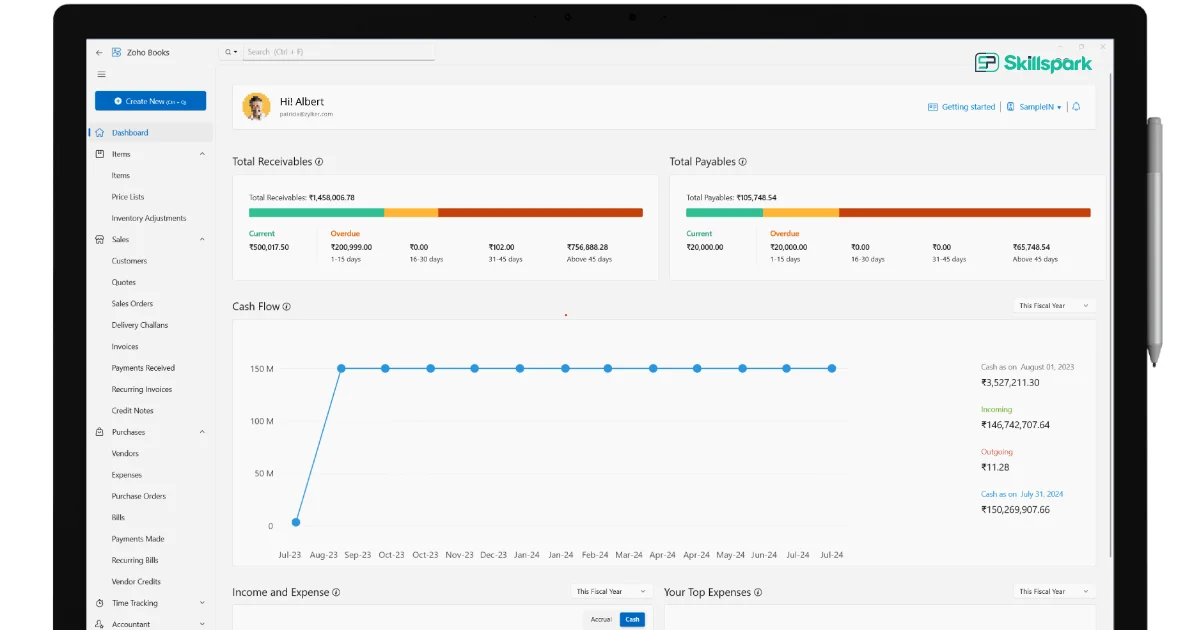
Meanwhile, Zoho Books, a homegrown Indian solution from Zoho Corporation, is rapidly emerging as the preferred replacement due to its affordability, native GST compliance, seamless ecosystem integration, and strong value proposition.
This in-depth, data-backed analysis (updated as of March 2026) explores the reasons behind QuickBooks’ weakening grip—especially in India—and why Zoho Books is increasingly the go-to alternative. Drawing from official pricing pages (Zoho Books India pricing at https://www.zoho.com/in/books/pricing/), user reviews, industry comparisons (Forbes Advisor, Capterra, Techjockey, ProfitBooks), and market trends, we examine evidence of pricing pressures, feature gaps, and migration drivers.
QuickBooks’ Longstanding Dominance and Emerging Cracks in India
QuickBooks has long been a staple for Indian businesses, particularly those with international operations or accountant preferences for its familiar interface. QuickBooks Online supports INR billing, GST compliance, and localized features. However, aggressive global pricing strategies, frequent increases, and forced shifts are creating significant friction.
- Steep Pricing Increases and High Costs in INR — Pricing dissatisfaction remains a top complaint. QuickBooks Online pricing in India aligns with global rates but converts to INR, often resulting in perceived hikes due to exchange rates and lack of deep localization discounts. Approximate monthly costs in INR (as of early 2026, based on global base prices converted at prevailing rates ~₹83-85/USD, subject to fluctuations and occasional promotions):
- Simple Start: ≈ ₹3,150–₹3,250/month (1 user, basic invoicing and expenses).
- Essentials: ≈ ₹6,200–₹6,400/month (3 users, bill management).
- Plus: ≈ ₹9,500–₹9,800/month (inventory, projects).
- Advanced: ≈ ₹22,800+/month (advanced reporting, automation).
These reflect global list prices (e.g., $38–$275/month), with occasional short-term discounts (e.g., 50% off for first 3 months in some promotions). Users in India frequently report effective costs rising over time, especially with add-ons like payroll or multi-user access. Desktop versions have seen even sharper jumps: Pro Plus renewals increased significantly in 2026 (e.g., from prior years’ ~$999 to higher annual figures), pushing many toward Online—but at ongoing subscription costs that feel burdensome for Indian SMBs.
- Forced Cloud Migration and Desktop Decline — Intuit continues emphasizing QuickBooks Online, with Desktop support and pricing under pressure (e.g., annual subscriptions now standard, with hikes noted in community forums). In India, where offline reliability matters for some, this shift alienates users. Intuit reports show Desktop revenue stagnation or declines, while Online grows—but churn rises among price-sensitive segments.
- User Complaints and Feature Limitations for Indian Businesses — Common pain points include:
- GST handling that works but lacks the native depth of India-focused tools (e.g., multi-GSTIN management often requires higher plans or workarounds).
- Limited seamless integrations with popular Indian CRMs, e-commerce platforms, or banking without third-party apps.
- Support delays, tiered assistance, and scaling challenges (user limits, performance for growing teams). Feedback from forums, Capterra, and reviews often labels it “overpriced for Indian basics” with “stronger local alternatives available.”
These factors fuel churn, especially among startups and SMEs prioritizing cost efficiency and compliance.
The Rise of Zoho Books as the Preferred Indian Alternative
Zoho Books, built with deep Indian localization (GST-ready, e-invoicing, multi-GSTIN support), offers a modern cloud solution integrated into the broader Zoho ecosystem (CRM, Inventory, Desk, etc.). Its adoption surges in India, driven by transparent INR pricing, a generous Free plan, and features tailored for local needs.
- Highly Affordable and Transparent Pricing in INR — Zoho Books excels with a Free plan and low entry points (prices exclusive of local taxes, as per official India pricing page in March 2026):
- Free Plan: ₹0 (indefinite if annual revenue ≤ ₹25 lakhs) — Up to 1,000 invoices and 1,000 bills/expenses annually; 3 users; basic invoicing, expenses, inventory, GST reports, banking & reconciliation; email support.
- Standard: Starts at ₹899/month (billed monthly; often lower ~₹749/month when billed annually) — 3 users; e-invoices, payments, progress invoicing, inventory tracking, automation, payment reminders, customer portal, GST filing, 5,000 invoices/bills annually.
- Professional: Higher tier (typically ~₹1,799/month billed monthly) — 5 users; project profitability, multi-currency, approvals, workflows, custom roles.
- Premium: Advanced (around ~₹3,599/month) — 10 users; payroll add-on (₹60–₹75/employee/month), budgets, assets, vendor portal.
- Elite: Further scaling — 15 users; warehouses, serial/batch tracking, e-commerce integrations (e.g., Shopify, Amazon).
- Ultimate: Top tier — 25 users; advanced analytics, KPIs.
Add-ons remain affordable: Extra users ₹150–₹180/month, locations ₹600–₹720/month, payroll from Premium onward. Annual billing discounts make it even more cost-effective. Compared to QuickBooks’ ₹3,000+ entry, Zoho’s Free/Standard saves thousands annually with no aggressive global hikes.
- Superior Value, Localization, and Modern Features — 2025–2026 comparisons favor Zoho for Indian users:
- GST & Compliance: Native e-invoicing, multi-GSTIN, GSTR filing—designed for Indian regulations.
- Automation & Ecosystem: Deep Zoho integrations reduce third-party dependency.
- Scalability: Better user roles, multi-branch support at lower costs. QuickBooks leads in some global payroll and broad integrations, but Zoho wins on affordability, simplicity, and India-specific value. Capterra ratings ~4.4/5 for both, with Zoho higher on value-for-money.
- Migration Trends and User Stories — Indian businesses switch for major savings, superior GST tools, and ecosystem benefits. Zoho’s growth aligns with India’s cloud accounting expansion, where compliant, affordable tools capture share.
Head-to-Head Comparison: Why Zoho Books Pulls Ahead for Indian Businesses in 2026
| Aspect | QuickBooks Online (India Approx. INR) | Zoho Books (India INR, Exclusive of Taxes) | Winner for Most Indian SMBs |
| Starting Price | ≈ ₹3,150+/month (Simple Start, 1 user) | Free (≤ ₹25L revenue) or Standard ₹899/month (3 users) | Zoho Books |
| Pricing Transparency & Increases | Frequent global hikes, INR fluctuations | Stable INR pricing, no hidden charges | Zoho Books |
| GST/India Compliance | Supported, but less native | Native e-invoicing, multi-GSTIN, GSTR filing | Zoho Books |
| Core Features | Strong reporting, inventory (higher plans) | Excellent automation, projects, inventory | Zoho for Indian needs |
| Ecosystem/Integrations | Vast third-party | Deep Zoho suite (CRM, etc.) | Zoho for integrated ops |
| Scalability & Users | Good, but costly add-ons | Affordable add-ons, better roles | Zoho Books |
| User Reviews (2025-2026) | Familiarity, but pricing complaints | High value, GST praise | Zoho Books |
Data from official sites, Forbes (2025), Capterra, and reviews highlight Zoho’s clear edge in cost and localization.
Conclusion: The Shift Is Real and Accelerating in India
QuickBooks retains strengths in global familiarity and certain integrations, but relentless pricing (especially 2026 hikes) and less India-centric design erode its appeal among cost-conscious Indian businesses. Zoho Books emerges as the superior replacement—delivering comparable (or better) features for Indian compliance, automation, and scaling—at dramatically lower costs, with a Free tier and transparent INR pricing starting at ₹899/month for Standard.
For Indian SMBs in 2026, priorities matter: If deep international payroll or accountant ubiquity is essential, QuickBooks may still fit. But for affordability, GST seamlessness, ecosystem synergy, and avoiding repeated hikes, Zoho Books is the strategic choice fueling widespread adoption today.
As India’s digital economy grows, value-focused tools like Zoho Books are capturing momentum. If QuickBooks’ costs are straining your business, switching to Zoho could deliver substantial savings and enhanced efficiency.